
TL;DR:
- Effective social media management involves a structured system aligned with specific business goals and targeted platforms. It requires strategic planning, the right tools, and AI-human collaboration to streamline routine tasks and focus on creative and complex engagement. Small businesses should measure meaningful metrics, establish clear workflows, and prioritize authentic content to turn social media into a valuable growth asset.
Most small business owners think social media management means posting a few times a week and calling it done. It's not. Social media management explained properly looks like a documented system connecting your content to real business goals, the right platforms, and a workflow you can actually maintain. Many brands treat social media like a megaphone, posting sporadically without measurable targets and wondering why nothing moves. This article breaks down every layer of what effective social media management actually requires, including how AI fits in, which tools work, and how to measure results that matter.
Table of Contents
- Key takeaways
- Social media management explained: the full picture
- How AI and humans work together in modern workflows
- Tools, content, and building a real workflow
- Measuring what actually matters
- My honest take on what most businesses get wrong
- How The Right Hand Agency Co can help
- FAQ
Key takeaways
| Point | Details |
|---|---|
| Strategy before scheduling | Define goals and audience before touching a content calendar or posting tool. |
| AI handles the routine | Use AI for scheduling and tier-1 engagement so humans can focus on creative direction. |
| Tools unify the workflow | The best platforms combine planning, publishing, analytics, and engagement in one place. |
| Metrics must match goals | Tie every KPI back to a SMART goal or the data tells you nothing useful. |
| Delegation reduces overwhelm | Operational support helps small business owners manage social media without burning out. |
Social media management explained: the full picture
Most people hear "social media management" and picture someone scheduling Instagram posts. The reality is that a solid social media strategy is a 10-step process that takes two to four weeks of focused planning before a single post goes live. It starts with your business goals and works backward.
Here is what a complete social media management strategy actually includes:
- SMART goals tied to business outcomes. Not "get more followers," but "generate 30 qualified leads per month from LinkedIn by Q3." Specific, measurable, and time-bound.
- Audience research beyond demographics. Knowing your audience's age and location is a starting point. Understanding where they hang out online, what language they use, and what questions they ask is the real intelligence.
- Platform selection based on behavior. Your audience being on every platform does not mean you should be. Pick two or three where they are most active and engaged.
- Content pillars. These are the core themes your brand consistently talks about. They keep your messaging focused and make content creation far less stressful.
- A review and adaptation cycle. Strategy is not a one-time document. It needs a monthly or quarterly review to stay relevant.
One distinction that trips up a lot of owners: a strategy is not a content calendar. The strategy defines why you post and what you want to achieve. The calendar organizes what goes live and when. Running a calendar without a strategy is like printing a map before you know your destination.
Pro Tip: Write your social media goals before opening any scheduling tool. If you cannot connect a goal to a business outcome in one sentence, revise the goal.

For a deeper look at connecting social media to business-level planning, that foundation will make every tactic more effective.
How AI and humans work together in modern workflows
The conversation around AI in social media management has shifted from "should we use it?" to "how do we structure it?" In 2026, AI-human collaboration in social media is the operating model, not the experiment.
Here is how to think about dividing responsibilities:
- AI handles scheduling. Set it, define your posting windows, and let it run. No manual queuing every day.
- AI manages tier-1 community interactions. Common questions, thank-you replies, and FAQ responses can be handled by trained AI agents without human involvement.
- AI surfaces analytics. Instead of digging through platform dashboards, AI tools flag what is performing and what is not, saving hours of weekly reporting time.
- Humans lead creative strategy. Tone, messaging pivots, campaign concepts, and nuanced brand storytelling are not AI territory yet. This is where your judgment matters.
- Humans manage complex interactions. A frustrated customer, a sensitive industry topic, or a PR situation requires a real person with real judgment.
The key to making this work is training. AI agents perform consistently when given detailed brand voice guides, pre-approved response libraries, and clear escalation protocols. Without that structure, AI responses drift from your brand voice quickly.
Pro Tip: Build a simple escalation rule before launching AI-assisted engagement: if a comment includes a complaint, a legal question, or negative sentiment, route it immediately to a human.
AI tools for small businesses have made this kind of tiered workflow accessible even for solo operators and small teams. The investment is in setup, not ongoing labor.
Tools, content, and building a real workflow
Good social media management does not require a massive tech stack. It requires the right tools used with intention. Modern social media platforms combine planning, publishing, engagement, listening, and analytics into unified workflows, which is exactly what small business owners need to avoid toggling between five different apps.
Here is a practical breakdown of what to look for in your tool set:
| Category | What to look for | Why it matters |
|---|---|---|
| Scheduling and publishing | Multi-platform posting, visual calendar | Saves time and creates consistency |
| Design and creative | Templates, brand kit, resizing | Keeps visuals on-brand without a full designer |
| Analytics and reporting | Goal tracking, engagement breakdown | Connects activity to outcomes |
| Engagement and listening | Unified inbox, mention alerts | Prevents missed conversations |
Once your tools are in place, build your content calendar from your strategic pillars, not the other way around. Assign each pillar a posting frequency and content format that fits the platform. Short video works on Instagram and TikTok. Long-form thought leadership fits LinkedIn. Static graphics and carousels still perform well across most platforms.
One thing small business owners consistently underestimate: authenticity beats perfection. A genuine, slightly imperfect video from the owner of a business will outperform a polished graphic from an anonymous brand account almost every time. Prioritize showing your perspective, your process, and your values.
Pro Tip: Batch-create content once a week rather than creating daily. Two focused hours on Monday produces a full week of posts with far less mental load.
For owners managing multiple operational systems, workflow tools for solo operators can help integrate your social media workflow into a broader operational setup.
Measuring what actually matters
Tracking the wrong numbers is one of the most common mistakes in social media management. Follower count feels good. It rarely connects to revenue.
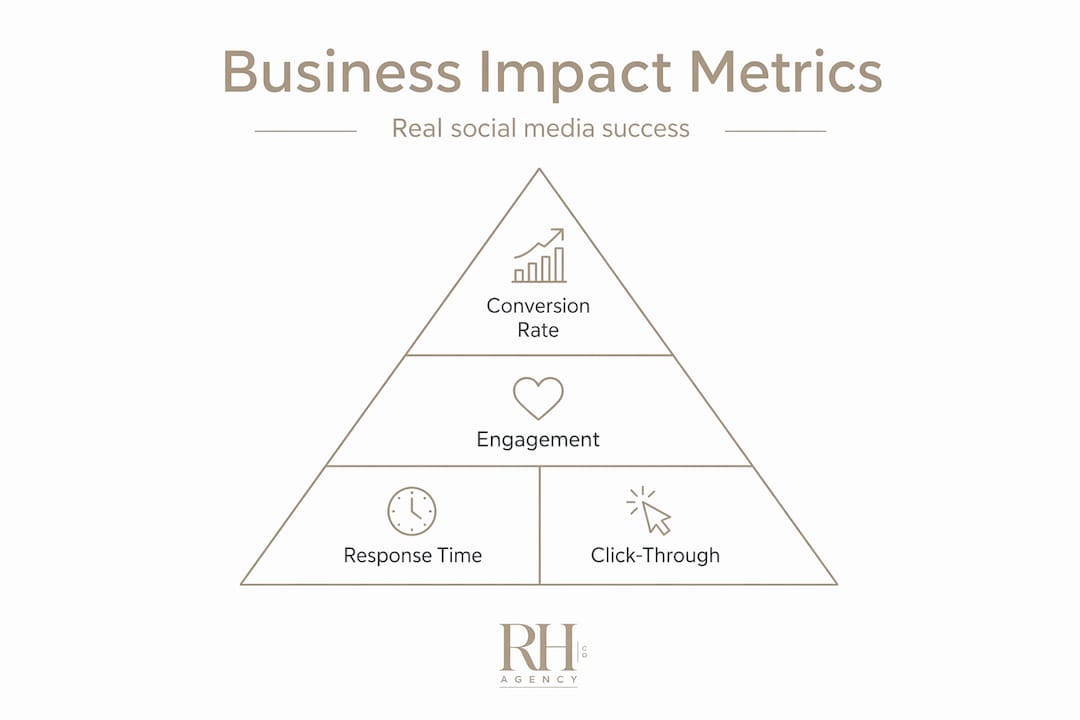
The metrics that reflect true business impact include engagement rate, click-through rate, conversion rate, response time, and sentiment score. Each one tells you something specific and ties back to a goal. Here is a quick comparison of result-driven metrics versus vanity metrics:
| Metric type | Examples | What it tells you |
|---|---|---|
| Result-driven | Conversion rate, leads generated, click-through | Direct connection to business outcomes |
| Engagement-based | Comments, shares, saves | Content resonance and audience relationship |
| Vanity | Followers, impressions, likes | Reach without context |
Schedule a monthly review where you compare performance against your SMART goals. If a content pillar is consistently underperforming, adjust the format or the platform before abandoning the topic entirely. Data should inform decisions, not just fill a report.
My honest take on what most businesses get wrong
I've worked with dozens of small business owners on their operations, and social media is the area where I see the most wasted effort. Not because people aren't working hard. Because they're working without a system.
The businesses that actually see results from social media are not the ones posting every day. They're the ones who spent time upfront defining what they want, who they're talking to, and how they'll know if it's working. Everything else flows from that.
What I've found is that pairing a clear strategy with the right operational structure takes the anxiety out of social media entirely. When you know your pillars, your posting rhythm, and your metrics, the weekly execution becomes a process, not a decision. Add AI for the repetitive work, delegate the coordination to someone who can manage it consistently, and you've turned social media from a drain into a genuine business asset.
The importance of social media presence is not about being everywhere. It's about showing up with purpose where it counts.
— Jessica
How The Right Hand Agency Co can help
Running a social media strategy alongside everything else that comes with owning a business is genuinely hard. The Right Hand Agency Co specializes in exactly this kind of operational support, helping small business owners and their teams get organized, execute consistently, and stop dropping the ball on marketing.
Whether you need marketing and social media coordination or a dedicated executive assistant to manage your content calendar, workflows, and platform scheduling, the team at The Right Hand Agency Co brings structure to the chaos. You get the support of an experienced operations partner without adding full-time overhead to your payroll.
FAQ
What is social media management?
Social media management is the process of planning, creating, publishing, and analyzing content across social platforms as part of a documented strategy tied to business goals. It includes community engagement, performance measurement, and ongoing strategy refinement.
How is a social media strategy different from a content calendar?
A social media strategy defines your goals, audience, and purpose. A content calendar organizes what you post and when. One without the other leads to either unfocused activity or a schedule with no strategic direction behind it.
What metrics should small businesses track on social media?
Focus on engagement rate, click-through rate, conversion rate, and response time rather than follower count. These metrics connect directly to business outcomes and reveal whether your content is actually working.
How does AI fit into social media management for small businesses?
AI handles routine tasks like scheduling, FAQ responses, and analytics summaries. Human managers focus on creative strategy, nuanced engagement, and complex decisions. Training AI with a brand voice guide and clear escalation rules keeps the output consistent.
How much time does social media management actually take?
Initial strategy development takes two to four weeks. Ongoing management, including content creation, scheduling, and review, typically requires four to eight hours per week depending on the number of platforms and posting frequency. Batching content and using scheduling tools reduces that time significantly.