
TL;DR:
- A solo founder's social media strategy should focus on clear goals, two key platforms, and consistent batching of content without relying on a marketing team. Engaging promptly and genuinely responds to comments and builds community, while tracking performance over 90 days guides content adjustments. Using systematic workflows and focusing on formats that work ensures organic growth and sustained traction.
A social media strategy for solo founders is a focused, repeatable system for publishing content, engaging your audience, and measuring results without a marketing team behind you. The founders who build real traction are not the ones posting the most. They are the ones who pick the right platforms, define clear goals, and execute consistently. Tools like Buffer and Canva make it possible to create a full month of content in a single session, and posting at least 3 times per week keeps algorithms from deprioritizing your account entirely.

How to create a social media strategy as a solo founder
The first step is separating goals that matter from metrics that feel good. Follower counts and likes are easy to track but rarely move your business forward. The goals worth measuring are leads generated, email signups, demo requests, or direct sales conversations.
Tie each goal to a specific business need. If you are pre-revenue, your goal might be 50 newsletter signups per month from social. If you are post-launch, it might be 10 qualified conversations per quarter. That specificity tells you which platform to prioritize and what content to create.
Goal clarity also prevents the most common solo founder mistake: spreading effort across five platforms and doing none of them well. Pick one primary goal, one primary platform, and one secondary platform. Everything else is a distraction until you have a system running.
- Lead generation: Focus on LinkedIn or Instagram with clear calls to action in every post
- Brand awareness: Prioritize Threads or X for reach and discoverability
- Community building: LinkedIn and Instagram both reward consistent, conversational content
- Traffic to your site: X and LinkedIn drive the highest click-through rates for B2B founders
Pro Tip: Write your primary social media goal on a sticky note and put it next to your screen. Every piece of content you create should connect back to that goal. If it does not, skip it.
Which platforms should solo founders actually use?
Platform selection is where most solo founders waste the most time. The right answer depends on whether you are selling to businesses or consumers.
LinkedIn is the primary platform for 97% of B2B marketers, making it the default starting point for founders selling services or software to other businesses. X and YouTube work well as secondary platforms for B2B. For consumer-facing products, Instagram and TikTok reach broader audiences, while Threads is gaining ground for founder-led personal brands.
Content format matters as much as platform choice. LinkedIn carousels outperform text posts with a median engagement rate of roughly 21.77%. Video dominates Threads. X rewards strong text hooks above everything else. Posting the same content across all platforms without adapting the format is what researchers call cross-platform pollution. It reduces engagement velocity and signals to algorithms that your content is not native to the platform.
| Platform | Best for | Top content format | Engagement window |
|---|---|---|---|
| B2B founders, service providers | Carousels, text posts | 24 to 48 hours | |
| Consumer brands, visual products | Reels, Stories | 2 to 6 hours | |
| Threads | Personal brands, thought leadership | Short video, text | 2 to 4 hours |
| X | Thought leadership, B2B reach | Text hooks, threads | 2 to 4 hours |
Pro Tip: Affordable tools like Buffer and Canva keep your monthly tool spend between $0 and $50. Start with their free tiers before paying for anything.
How to define content pillars and batch your content
Content pillars are the 3 to 5 recurring themes that anchor everything you post. They exist so you never stare at a blank screen wondering what to write. A B2B founder might use pillars like: client results, behind-the-scenes operations, industry perspective, and founder lessons. A consumer brand might use: product education, user stories, lifestyle content, and promotional offers.
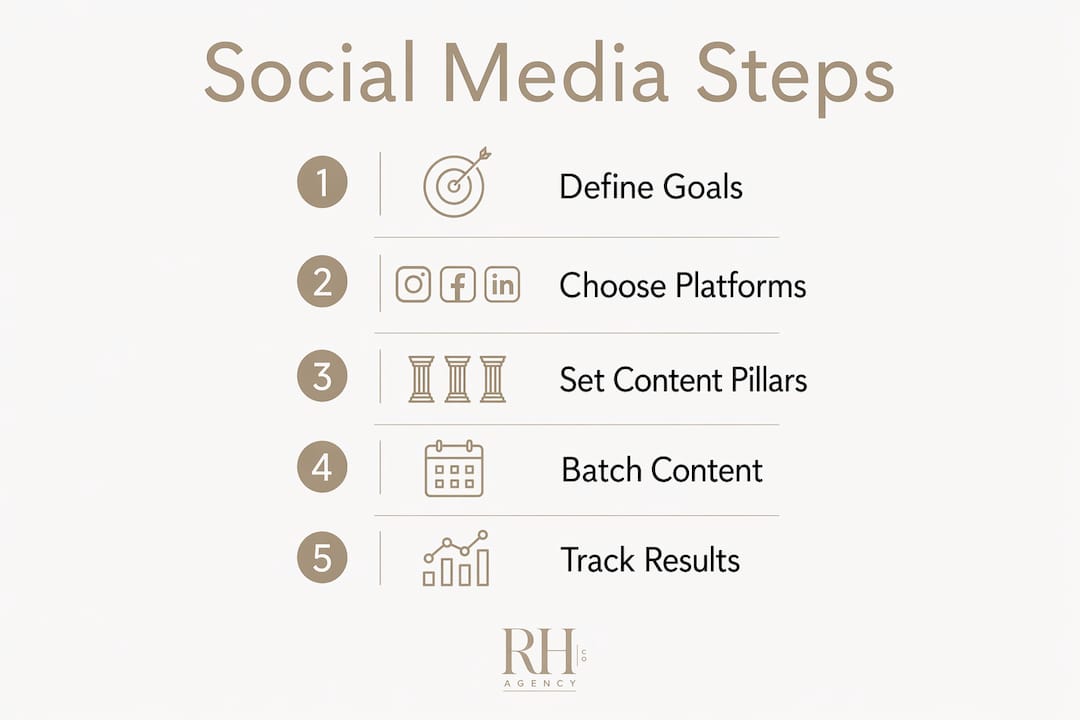
Once your pillars are defined, build a content bank for each one. A content bank is simply a running list of post ideas organized by pillar. Spend 30 minutes once a week adding ideas to the bank, and you will never run out of material.
The real efficiency gain comes from batching. Creating a full month of content in one session removes the daily pressure of figuring out what to post and prevents the inconsistency that kills organic growth. Here is a simple batching workflow:
- Block two to three hours once per month for content creation
- Pull 12 to 15 ideas from your content bank (3 to 4 per pillar)
- Write all captions in one sitting using a Google Doc or Notion template
- Create all graphics in Canva using a consistent brand template
- Upload everything to Buffer and schedule posts for the month
- Set a weekly 15-minute reminder to check comments and engagement
This system means social media gets done whether you feel inspired or not. That consistency is what organic traction requires. Sporadic effort, even high-quality sporadic effort, does not compound the way consistent posting does.
What engagement strategies actually build an audience?
Most founders treat social media as a broadcast channel. They post content and wait for results. That approach misses the half of the strategy that actually builds community.
Replying to every comment within the first hour of posting lifts engagement by 8% to 42% depending on the platform. The lift is 42% on Threads, 30% on LinkedIn, 21% on Instagram, and 8% on X. That single habit, replying fast, signals to the algorithm that your content is generating real conversation. It also tells your audience that you are present and worth engaging with.
Beyond your own posts, spend 10 to 15 minutes per day making genuine comments on relevant posts in your niche. Not "great post!" comments. Specific, thoughtful responses that add a perspective or ask a follow-up question. This positions you as a credible voice in your space and drives profile visits from people who have never seen your content before.
The founders who grow fastest on social media are not the ones with the best content. They are the ones who show up in conversations consistently, ask good questions, and make other people feel heard.
Low-friction questions at the end of your posts also work well. "Which of these would you try first?" or "What has worked for you?" invites quick responses without requiring much effort from your audience. For more on B2B engagement tactics that build real client relationships, the approach applies directly to founder-led social accounts.
How to track results without overcomplicating it
Tracking social media performance does not require a complex dashboard. Three metrics cover most of what you need to know: engagement rate, follower growth, and click-throughs to your website or landing page.
Review content performance biweekly or monthly and use the data to adjust your content pillars. If your behind-the-scenes posts consistently outperform your industry commentary, shift the ratio. Let the data guide the mix rather than guessing.
- Pull your top 5 posts from the past two weeks using Buffer analytics or native platform insights
- Identify the common thread (format, topic, tone, or time of posting)
- Create two to three more posts that replicate what worked
- Flag any pillar that has underperformed for three consecutive reviews and replace it
The most important rule in tracking is patience. Organic social media rarely shows measurable ROI before 90 days of consistent posting. Founders who quit at week six because "it is not working" never give the algorithm enough data to start distributing their content.
Pro Tip: Set a calendar reminder for 90 days from your launch date. That is your first real performance review. Everything before that is data collection, not judgment.
Key takeaways
A solo founder social media strategy works when it is built around one clear goal, two platforms maximum, consistent posting, and genuine engagement rather than broadcast-only content.
| Point | Details |
|---|---|
| Set one measurable goal | Tie your goal to leads, signups, or sales rather than follower counts. |
| Pick two platforms maximum | Choose based on B2B or B2C audience fit, then adapt content format per platform. |
| Batch content monthly | Create a full month of posts in one session using Buffer and Canva to stay consistent. |
| Reply within the first hour | Early replies lift engagement by up to 42% and signal algorithm activity. |
| Commit to 90 days | Organic traction is not measurable before 90 days of consistent posting. |
What I have learned from watching solo founders build social from scratch
The founders who struggle most with social media are not the ones who lack creativity. They are the ones who treat it like a creative outlet instead of a business function. When social media has no system behind it, it becomes reactive, inconsistent, and exhausting.
What actually works is treating your content calendar the same way you treat your invoicing or client onboarding. It runs on a schedule. It has a process. It gets done regardless of how inspired you feel that week. Batching content is the single biggest shift I see make a difference. Founders who manage social media systematically instead of daily outperform those who wing it, every time.
The other mistake I see constantly is chasing platform trends instead of doubling down on what is already working. If your LinkedIn carousels are getting traction, make more of them. Do not abandon a working format to experiment with Reels because you read an article about video growth.
The long game wins. Show up consistently, engage genuinely, and give the algorithm 90 days to catch up with your effort.
— Jessica
Let The Right Hand Agency Co handle the execution
Building a social media system takes time you may not have. The Right Hand Agency Co works with solo founders to set up content workflows, manage scheduling, and handle the operational side of social media so you can focus on running your business.
From executive assistant support that manages your content calendar and engagement tasks, to marketing coordination that keeps your posting consistent week after week, The Right Hand Agency Co provides the operational backbone your social strategy needs. You bring the expertise and voice. We handle the systems and execution. Explore our marketing and social media services to see how we support solo founders at every stage.
FAQ
How many posts per week should a solo founder publish?
The minimum viable posting cadence is 3 posts per week. Posting less than this causes algorithm deprioritization and slows organic growth significantly.
Which platform is best for B2B solo founders?
LinkedIn is the primary platform for 97% of B2B marketers and is the recommended starting point for founders selling to other businesses. X and YouTube work well as secondary platforms.
How long does it take to see results from organic social media?
Organic social media rarely shows measurable ROI before 90 days of consistent posting. Commit to a full quarter before evaluating whether your strategy is working.
What is cross-platform pollution and why does it matter?
Cross-platform pollution means posting identical content across platforms without adapting the format. It reduces engagement velocity and signals to algorithms that your content is not native to the platform.
What tools do solo founders need for social media?
Buffer for scheduling and Canva for graphics cover the core needs. Both offer free tiers that keep your monthly tool spend at or near zero in early stages.